
The Shocking Truth Behind Every Financial Crash
What if the secrets to building real wealth were hidden in plain sight? In this article, we explore the transformative ideas from Manias, Panics, and Crashes by Charles P. Kindleberger and Robert Z. Aliber — and how you can apply them to your own financial journey.
“Manias, Panics, and Crashes” is a classic economic book that examines the recurring patterns of financial crises throughout history. Originally written by Charles P. Kindleberger and later updated by Robert Z. Aliber, the book explains how market bubbles form, why they burst, and how governments and institutions respond to financial collapses.
Kindleberger’s central argument is that financial crises follow a predictable cycle—starting with economic euphoria (mania), followed by a sharp reversal (panic), and culminating in widespread financial distress (crash). The book explores case studies from Tulip Mania (1637) to the 2008 Global Financial Crisis, showing how speculative excess leads to economic disaster.

Key Themes & Insights
1. The Lifecycle of Financial Crises
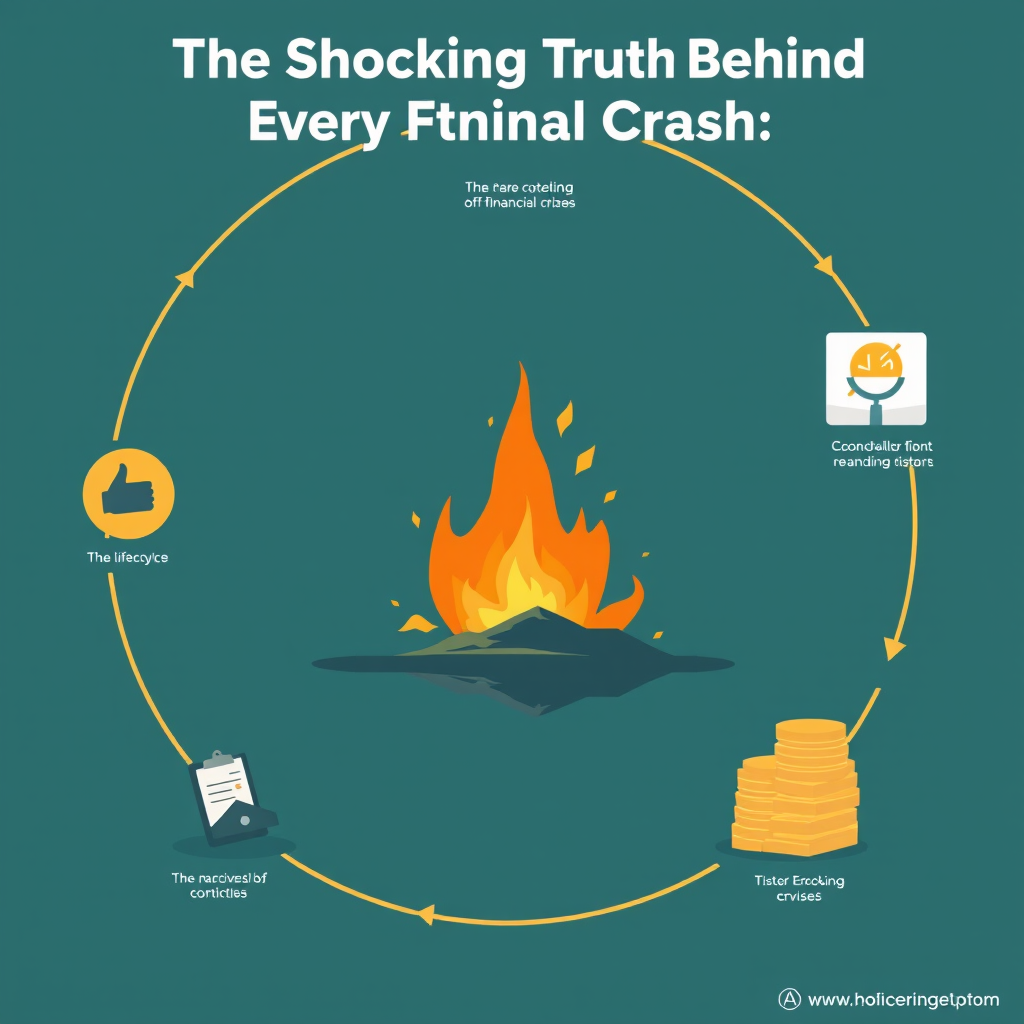
Kindleberger outlines a five-stage model for financial crises:
- Displacement – A major economic shift (e.g., technological innovation, financial deregulation, or war) sparks investment and optimism.
- Boom – Credit expands, speculation rises, and asset prices soar beyond fundamental values.
- Euphoria & Mania – Investors ignore risk, believing prices will rise indefinitely. Borrowing and leverage increase.
- Panic – A trigger event (e.g., rising interest rates, debt defaults) causes doubt. Investors rush to sell assets.
- Crash & Contagion – Markets collapse, bankruptcies surge, and the crisis spreads to other sectors or countries.
Financial bubbles follow the same cycle, regardless of time period or asset class.
2. Speculative Manias: History Repeats Itself
The book provides historical examples of financial bubbles, including:
Tulip Mania (1637) – The first recorded asset bubble, where Dutch investors drove tulip prices to irrational levels before a massive crash.
South Sea Bubble (1720) – British investors speculated in government-backed trade ventures, leading to a market collapse.
1929 Stock Market Crash – Excessive speculation fueled by easy credit led to the Great Depression.
Dot-Com Bubble (2000) – Internet stocks surged on hype but later collapsed when companies failed to generate profits.
2008 Global Financial Crisis – Subprime mortgage lending, excessive leverage, and complex financial products led to a banking collapse.
Despite different contexts, human psychology and greed drive all financial bubbles.

3. The Role of Credit & Leverage in Bubbles
Kindleberger argues that financial crises are fueled by excessive credit expansion:
Banks and investors take on too much risk during booms.
Leverage (borrowed money) amplifies gains—but also magnifies losses.
When credit dries up, asset prices collapse, and the financial system faces liquidity crises.
Easy credit makes financial booms more extreme and their crashes more severe.

4. The Role of Governments & Central Banks
Kindleberger explores how governments respond to financial crises:
Lender of Last Resort – Central banks must provide emergency liquidity to prevent banking collapses.
Regulation & Oversight – Financial markets need rules to prevent reckless speculation.
Bailouts vs. Moral Hazard – Government rescues can stabilize economies but may encourage future risk-taking.
Kindleberger believes central banks should intervene to prevent crises from worsening, but their actions must be carefully managed to avoid creating more risk-taking behavior.
Key Takeaways
Financial bubbles are predictable – They always follow a similar cycle of mania, panic, and crash.
Human psychology drives speculation – Greed, overconfidence, and fear create market volatility.
Excessive credit fuels financial crises – Borrowing amplifies market movements, making crashes worse.
Government intervention can stabilize markets – But poorly managed rescues create moral hazard.
Final Thoughts
Manias, Panics, and Crashes is a must-read for investors, economists, and policymakers. The book teaches that financial crises are not random but follow historical patterns—offering valuable lessons on how to recognize and manage them.
Ready to Learn More?
Want more insights on finance, investing, and wealth-building? Explore The Summary Series by Dominus Code — where we distill the world’s best finance books into practical wisdom.
This article was inspired by Manias, Panics, and Crashes by Charles P. Kindleberger and Robert Z. Aliber.