

The One Investing Rule That Made Warren Buffett Rich: A Complete Guide to Value Investing
What if the secret to building lasting wealth isn’t about finding the next hot stock or timing the market perfectly? What if it’s about something far simpler — and far more powerful?
Warren Buffett, one of the richest people on the planet, credits a single book with shaping his entire investment philosophy. That book is The Intelligent Investor by Benjamin Graham, and the rule it teaches has nothing to do with luck, trends, or insider tips.
It’s about value. Pure, disciplined, rational value.
In this article, we’ll break down the core principles that transformed Buffett from a young Nebraska investor into the Oracle of Omaha — and show you how to apply them to your own portfolio, whether you’re just starting out or looking to refine your strategy.

Investment vs. Speculation: Know Which Game You’re Playing
Benjamin Graham draws a sharp line between two activities that most people confuse:
- Investment — An operation that, through thorough analysis, promises safety of principal and an adequate return. Anything else falls into a different category.
- Speculation — Betting on price movements without a solid foundation in the underlying value of an asset.
Most people who think they’re investing are actually speculating. They buy stocks because they’re going up, sell because they’re going down, and make decisions based on headlines, tips, or fear. That’s not investing. That’s gambling with extra steps.
The intelligent investor doesn’t try to get rich quick. They focus on preserving capital first, then earning a reasonable return second. This might sound boring, but it’s exactly how Buffett built his fortune — slowly, steadily, and with extraordinary discipline.

Mr. Market: Your Emotional Worst Enemy — and Best Opportunity
Graham introduces one of the most powerful metaphors in finance: Mr. Market.
Imagine you own a share of a business with a partner named Mr. Market. Every single day, he shows up at your door and offers to either buy your share or sell you his — at a price he sets based entirely on his mood that morning.
Some days, Mr. Market is euphoric. He’ll pay absurdly high prices because he’s convinced the business is worth a fortune. Other days, he’s terrified. He’ll offer to sell his share for pennies because he read a bad headline or had a sleepless night.
Here’s the critical insight: Mr. Market’s price has nothing to do with the actual value of the business. It’s driven purely by emotion — greed, fear, panic, and euphoria.
The intelligent investor uses Mr. Market’s mood swings as opportunities, not instructions. When he’s depressed and offering low prices, you buy. When he’s manic and offering sky-high prices, you sell (or at least refuse to buy more). You never let his emotions dictate your decisions.

The Margin of Safety: Your Financial Armor
If there’s one concept that defines value investing, it’s this: margin of safety.
Here’s how it works. Every asset — a stock, a bond, a piece of real estate — has an intrinsic value. That’s what it’s actually worth based on fundamentals: earnings, dividends, growth potential, and financial health.
The market price rarely matches intrinsic value exactly. Sometimes it’s higher. Sometimes it’s lower. The intelligent investor only buys when the price is significantly below the intrinsic value — creating a “margin of safety.”
This margin serves as a buffer against three things:
- Bad decisions — If your analysis is slightly wrong, the margin protects you.
- Market downturns — Even if prices fall further, you bought cheap enough to weather the storm.
- Unexpected events — Black swans happen. A margin of safety keeps you from being wiped out.
As Graham puts it: “The function of the margin of safety is, in essence, that of rendering unnecessary an accurate estimate of the future.”
You don’t need to predict the future perfectly. You just need to buy with enough cushion that even a pessimistic outcome still leaves you profitable.

Defensive vs. Enterprising Investor: Which One Are You?
Graham recognized that not all investors have the same temperament, time, or expertise. He divided them into two categories:
The Defensive Investor
This is the passive, risk-averse investor who wants consistent returns without spending hours analyzing financial statements. The defensive investor:
- Focuses on blue-chip stocks, index funds, and high-quality bonds
- Emphasizes diversification to spread risk across many assets
- Practices long-term holding rather than frequent trading
- Accepts market-average returns in exchange for lower risk and less effort
If you have a full-time job, a family, and no interest in spending weekends reading annual reports, this is probably you. And that’s perfectly fine — Graham designed this approach specifically for people who want wealth preservation with minimal effort.
The Enterprising Investor
This is the active investor willing to do deep research, analyze companies thoroughly, and seek out special situations. The enterprising investor:
- Seeks undervalued stocks that the market has overlooked or misunderstood
- Looks for special situations like mergers, spin-offs, or liquidations
- Has the patience and discipline to wait for the right opportunity
- Accepts higher risk in exchange for potentially higher returns
Buffett started as an enterprising investor, spending his days reading financial statements and hunting for bargains. But he had the temperament, time, and expertise to do it well. Most people don’t — and shouldn’t pretend they do.
The key is honest self-assessment. Are you willing to spend 10+ hours a week researching investments? Do you have the emotional discipline to hold when others panic? If not, embrace the defensive approach. It works.

Intrinsic Value: The Number That Actually Matters
In a world obsessed with stock prices, Graham redirects attention to what actually matters: intrinsic value.
This is the true, underlying worth of a business based on fundamentals like:
- Earnings — How much profit does the company actually generate?
- Dividends — Does it return cash to shareholders consistently?
- Growth potential — Can it expand earnings over time?
- Financial health — Does it have manageable debt and strong cash flow?
The intelligent investor analyzes these factors to estimate what a business is truly worth. Then they wait — sometimes for years — until the market offers to sell it at a price well below that value.
This is the opposite of how most people invest. They see a stock going up and buy because they fear missing out. They see a stock going down and sell because they’re afraid it’ll keep falling. They’re reacting to price, not value. And that’s why most investors underperform.

Market Fluctuations Are Opportunities, Not Threats
Volatility scares most people. It excites the intelligent investor.
Graham viewed market fluctuations as a fundamental feature of investing — not a bug to be feared. When prices drop, they don’t destroy value; they create buying opportunities. When prices soar irrationally, they create selling opportunities (or at least reasons to stop buying).
The key emotional discipline is this: Don’t panic during downturns. Don’t get greedy during booms.
Graham strongly discourages timing the market or chasing trends. You cannot predict short-term price movements. No one can. What you can do is buy solid businesses at reasonable prices and hold them for years while compounding works its magic.
Buffett’s famous quote captures this perfectly: “Be fearful when others are greedy, and greedy when others are fearful.”
Building a Balanced Portfolio That Works
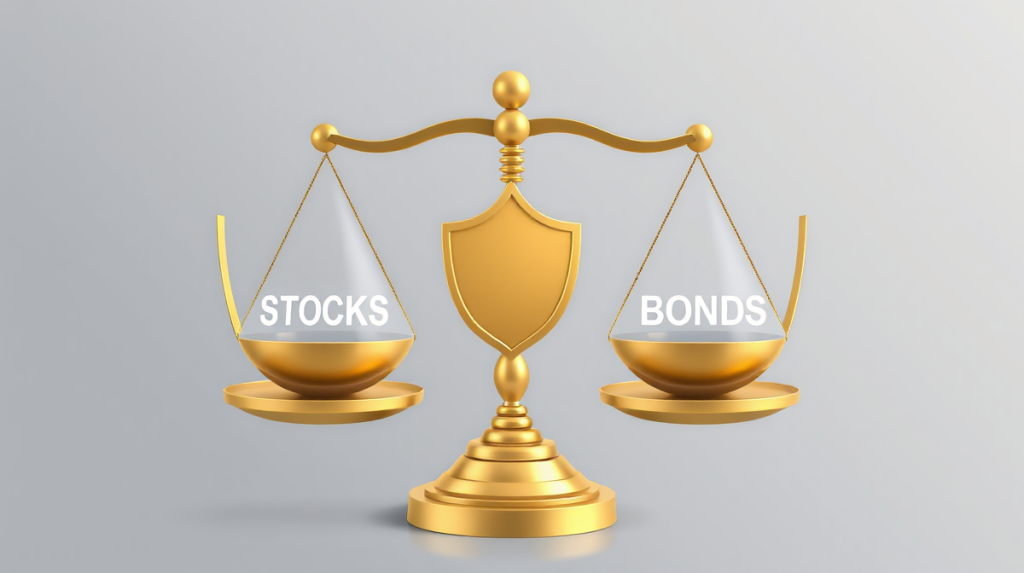
Graham recommended a balanced portfolio of stocks and bonds, with allocations adjusted based on your age, risk tolerance, and market conditions. His general guideline:
- Keep between 25% and 75% in stocks
- The rest in high-quality bonds for stability and income
- Adjust based on market valuations — increase stock allocation when markets are cheap, decrease when they’re expensive
This might sound conservative by today’s standards, when some investors are 100% in stocks or crypto. But Graham lived through the Great Depression and the crash of 1929. He understood that preserving capital during catastrophic downturns matters more than maximizing gains during booms.
A balanced portfolio doesn’t maximize returns in bull markets. It protects you in bear markets. And over a lifetime of investing, that protection is what separates wealth builders from wealth destroyers.

Why These Principles Still Matter Today
Some readers might think: “This book was written in 1949. Surely markets have changed?”
They have — and they haven’t.
Yes, we now have ETFs, algorithmic trading, commission-free apps, and cryptocurrencies. But human psychology hasn’t changed one bit. Fear and greed still drive prices. Investors still panic at bottoms and euphorically buy at tops. And the fundamentals of business — earnings, cash flow, competitive advantage — still determine long-term value.
In fact, the principles matter more today because the noise is louder. Social media, financial news, and trading apps bombard us with information designed to trigger emotional reactions. The intelligent investor is the one who ignores the noise and focuses on what matters: buying good businesses at good prices, with a margin of safety.
Key Takeaways for the Modern Investor
- Focus on capital preservation and long-term value, not short-term gains or hot trends
- Always invest with a margin of safety — buy well below intrinsic value
- Learn to analyze companies based on fundamentals, not hype, tips, or headlines
- Be emotionally disciplined — irrational behavior is the biggest risk in investing
- Know whether you’re a defensive or enterprising investor, and build your strategy accordingly
Ready to Build Wealth the Smart Way?
The principles in this article have stood the test of time — through bull markets, bear markets, crashes, and recoveries. They worked for Benjamin Graham in the 1930s. They worked for Warren Buffett over six decades. And they can work for you.
The intelligent investor doesn’t chase the market. They don’t panic. They don’t get greedy. They simply buy value when it’s cheap, hold with patience, and let compounding do the heavy lifting.
It’s not exciting. It’s not glamorous. But it works.
Want more insights like this? Explore The Summary Series by Dominus Code — where we distill the world’s most important books on finance, investing, productivity, and personal growth into actionable wisdom you can use today.
This article was inspired by The Intelligent Investor by Benjamin Graham — widely regarded as the most influential investment book ever written, and the foundation of Warren Buffett’s legendary success.