

How to Start Real Estate Investing With No Money: The Wholesaling Blueprint
What if you could make $5,000 to $50,000 per deal in real estate without ever buying a property, getting a loan, or using your own credit?
It sounds impossible. But thousands of investors are doing exactly that through a strategy called real estate wholesaling — and many started with nothing more than a phone, persistence, and the willingness to learn.
This isn’t house flipping. You won’t be swinging hammers or managing contractors. You won’t need a down payment, a bank approval, or a perfect credit score.
Instead, you’ll learn how to find deeply discounted properties, get them under contract, and pass those deals to cash buyers for a profit. The entire process can take weeks, not months. And the best part? Your profit comes from the assignment fee — money you earn simply for connecting the right seller with the right buyer.
Here’s everything you need to know to get started.
What Is Real Estate Wholesaling?
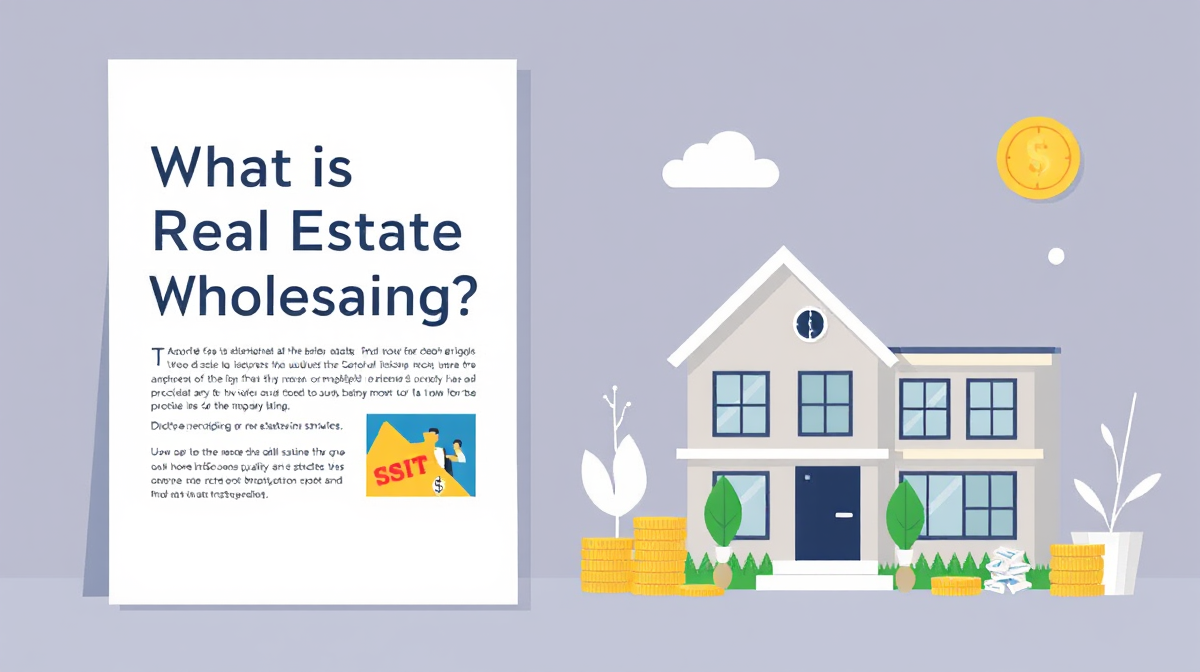
Real estate wholesaling is the art of finding undervalued properties and assigning the purchase contract to an end buyer — usually a real estate investor or flipper — for a fee.
The process works like this:
- Find a motivated seller willing to sell below market value.
- Get the property under contract at a discounted price.
- Find a cash buyer (investor, flipper, or landlord) who wants the deal.
- Assign the contract to the buyer for an assignment fee.
- Get paid at closing — typically $5,000 to $50,000 per deal.
You never own the property. You never need financing. Your role is simple: be the matchmaker between distressed sellers and hungry buyers.

Why Wholesaling Works for Beginners
Most real estate strategies require capital, credit, or both. Wholesaling requires neither.
- No large capital needed. You don’t buy the property. You only need enough for marketing and maybe an earnest money deposit (often $100–$500, sometimes refundable).
- No credit required. You’re not applying for loans. Cash buyers handle the purchase.
- No renovation risk. You never touch a hammer or hire a contractor.
- Fast turnaround. Deals close in weeks, not months.
- Scalable. Once you learn the system, you can do deals nationwide — even virtually.
The downside? It’s not passive income. Wholesaling is a business, not an investment. You need to actively find deals, build relationships, and close transactions. But for beginners with more hustle than cash, it’s the perfect entry point into real estate.
Finding Motivated Sellers: The Secret to Good Deals
The entire wholesaling model depends on one thing: finding properties at deep discounts. You can’t wholesale market-priced homes. You need motivated sellers who need to sell now — and are willing to accept less than full value to make that happen.
Types of Motivated Sellers
- Distressed property owners — homes in foreclosure, probate, or severe disrepair
- Tired landlords — rental property owners burned out by tenant problems
- Divorce or financial hardship — sellers who need quick cash for personal reasons
- Inherited properties — heirs who don’t want to manage or repair an unwanted house
- Absentee owners — out-of-state owners with vacant or neglected properties
How to Find Them
Successful wholesalers use multiple marketing channels to generate leads:
- Direct mail — Postcards and letters to distressed property lists (foreclosure, probate, tax delinquent)
- Bandit signs — “We Buy Houses” signs placed strategically in target neighborhoods
- Online advertising — Google Ads, Facebook Ads, and SEO-optimized websites
- Driving for dollars — Physically driving through neighborhoods to spot vacant or dilapidated properties
- Networking — Real estate meetups, investor groups, and relationships with agents
- Wholesaling software — Platforms like PropStream, BatchLeads, or REIPro for data and automation
The key metric is cost per deal. Track how much you spend on marketing versus how many contracts you close. Most successful wholesalers budget $2,000–$5,000 per month in marketing to generate 2–4 deals.

The Art of Negotiation: Getting Properties Under Contract
Finding a motivated seller is only half the battle. You need to negotiate a price low enough that a cash buyer will still see profit potential after paying your assignment fee.
The 70% Rule
Cash buyers (flippers) typically want to buy at 70% of after-repair value (ARV) minus repair costs. This means:
Your contract price + your assignment fee + repair costs ≤ 70% of ARV
If you can’t get the seller to agree to a price that leaves room for your fee and the buyer’s profit, walk away. Not every lead becomes a deal. The best wholesalers say “no” far more often than they say “yes.”
Negotiation Principles
- Build rapport first. Sellers need to trust you before they’ll accept a below-market offer. Listen to their situation. Show empathy.
- Solve their problem, not yours. Frame the offer as a solution to their pain (foreclosure, debt, unwanted property), not as you trying to get rich.
- Use an assignable contract. Make sure your purchase agreement explicitly allows assignment to another buyer.
- Keep contingencies minimal. An inspection contingency is standard, but too many contingencies make sellers nervous.
Building Your Cash Buyer List
A great deal without a buyer is worthless. Smart wholesalers build their buyer list before they have a deal, not after.
Where to Find Cash Buyers
- Real estate investor meetups — Local REIA (Real Estate Investors Association) meetings
- Online platforms — BiggerPockets, Facebook investor groups, Craigslist
- Auctions and courthouse steps — The same people buying at auction are often looking for off-market deals
- Hard money lenders — They have investor clients who need deals
- Property management companies — Their landlord clients often want to expand their portfolios
For each buyer, track what they want: price range, neighborhoods, property type (single-family, duplex, commercial), and renovation appetite. The better you understand your buyers, the faster you can match them with the right deals.

Closing the Deal and Getting Paid
Once you have a contract and a buyer, it’s time to close. There are two main ways to structure the deal:
Assignment of Contract
You simply transfer your contractual rights to the end buyer. They step into your shoes, close directly with the seller, and pay you an assignment fee at closing. This is the simplest and most common method.
Double Closing
You briefly buy the property (using transactional funding) and immediately resell it to your end buyer. This method is used when sellers or buyers prefer not to see the assignment fee on the settlement statement.
Typical assignment fees: $5,000–$20,000 for beginner deals; $20,000–$50,000+ for experienced wholesalers handling larger properties or hotter markets.
Scaling Your Wholesaling Business
Wholesaling isn’t just a side hustle — it can become a six-figure or seven-figure business. Here’s how to scale:
- Hire virtual assistants (VAs) to handle lead generation, follow-up, and administrative tasks
- Build a team — acquisition managers, disposition specialists, and transaction coordinators
- Expand geographically — virtual wholesaling lets you do deals in any market from your laptop
- Leverage technology — CRM software, automated marketing, and deal analysis tools multiply your output
Top wholesalers close 20–50 deals per year. At an average assignment fee of $15,000, that’s $300,000–$750,000 in annual revenue — with minimal capital invested.

Key Takeaways
- Wholesaling is the fastest way to start in real estate without capital, credit, or renovation skills.
- Finding motivated sellers is the foundation of every successful wholesaling business.
- Negotiation and marketing skills matter more than real estate knowledge.
- Building a cash buyer list before you have deals ensures fast closings.
- Scaling requires automation, team-building, and systems.
Ready to Take Action?
Real estate wholesaling isn’t a get-rich-quick scheme. It’s a real business that rewards hustle, learning, and persistence. But for beginners who want to break into real estate with minimal capital, it’s the most accessible path available.
Start by learning your market, building your buyer list, and sending your first marketing campaign. Your first deal might be closer than you think.
Want more insights on building wealth through real estate, investing, and financial strategy? Explore The Summary Series by Dominus Code — where we distill the world’s best finance and investing books into actionable guides you can use today.
This article was inspired by The Real Estate Wholesaling Bible by Than Merrill — a step-by-step guide to making money in real estate without owning properties.