
The One Lesson That Explains All of Economics
What if the secrets to building real wealth were hidden in plain sight? In this article, we explore the transformative ideas from Economics in One Lesson: The Shortest and Surest Way to Understand Basic Economics by Henry Hazlitt — and how you can apply them to your own financial journey.
“Economics in One Lesson” by Henry Hazlitt is a classic book that simplifies economic principles and exposes common fallacies in economic thinking. First published in 1946, it remains highly relevant today, promoting the idea that good economics considers the long-term effects of policies, not just immediate consequences.
The “one lesson” of the book is simple:
The art of economics consists in looking not merely at the immediate but at the longer effects of any act or policy; it consists in tracing the consequences of that policy not merely for one group but for all groups.
Through a series of examples, Hazlitt debunks flawed economic policies and argues for free markets, minimal government intervention, and the importance of incentives.

Key Themes & Insights

1. The Broken Window Fallacy
Hazlitt begins with Frédéric Bastiat’s parable of the broken window, which shows why destruction does not create economic growth.
Wrong idea: When a window breaks, money spent to fix it “stimulates” the economy.
Reality: That money could have been used for other productive purposes, meaning no real economic gain.
Key Lesson: Economic policies must consider opportunity costs—what is lost when resources are misallocated.

2. The Seen vs. the Unseen
Bad economic thinking focuses on immediate, visible benefits while ignoring long-term, hidden costs.
Example: Government spending on public works creates jobs (seen), but taxes needed to fund them take money away from private businesses (unseen).
Example: Minimum wage laws may raise wages for some workers (seen) but cause job losses for others (unseen).
Key Lesson: Good economics looks at the total effects on all groups, not just one.
3. Why Government Spending Doesn’t Create Wealth
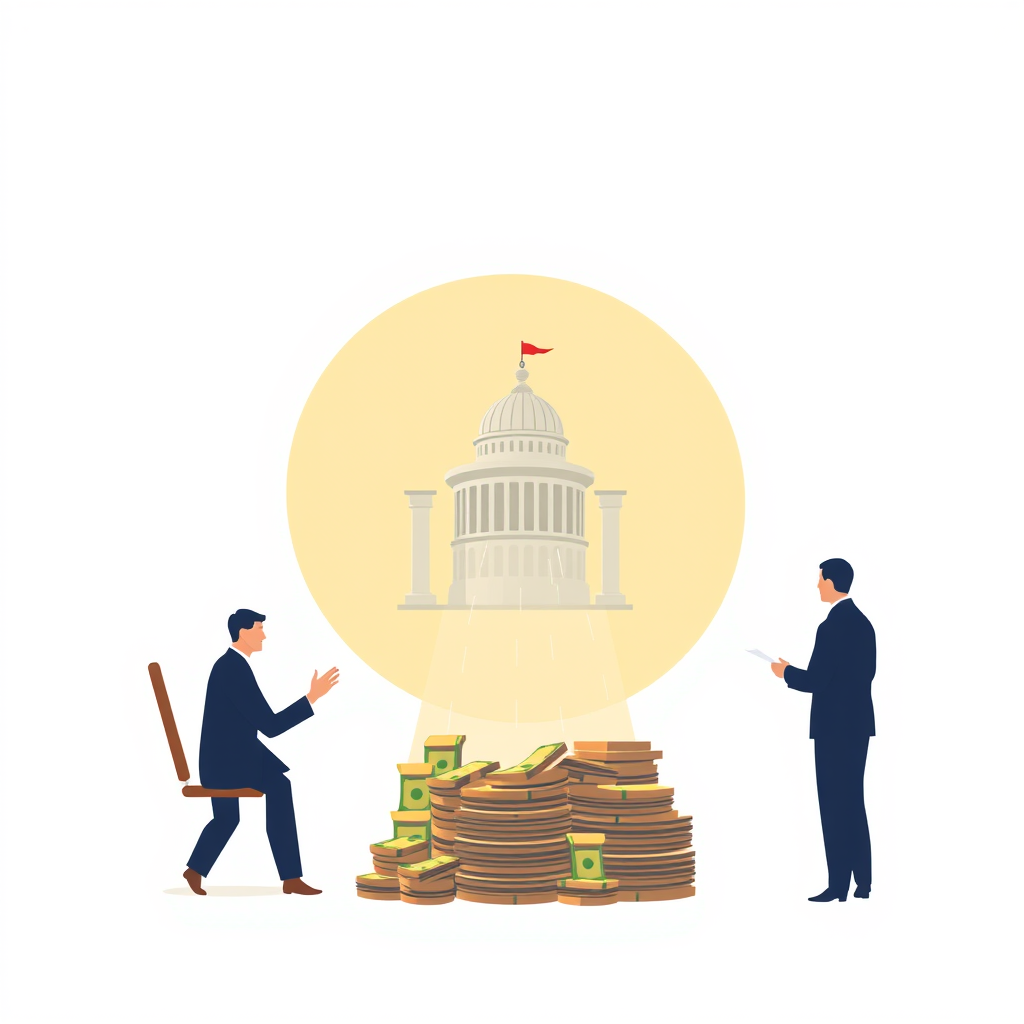
Hazlitt argues that government cannot create wealth—it can only redistribute it.
Public works projects use taxpayer money, so while they may create jobs in one area, they reduce spending power elsewhere.
Subsidies and price controls distort markets, leading to inefficiency and shortages.
Wartime spending does not boost long-term prosperity—war destroys capital and resources.
Key Lesson: Government intervention often shifts resources inefficiently rather than growing the economy.

4. Inflation & the Dangers of Easy Money
Hazlitt warns against inflationary policies, arguing that printing money leads to:
Higher prices (reduced purchasing power).
Boom-and-bust cycles, where credit expansion fuels speculation, followed by crashes.
Hidden taxation, where inflation devalues people’s savings.
Key Lesson: Stable money and sound fiscal policies are necessary for real economic growth.
5. Free Markets vs. Government Controls
Hazlitt defends free markets as the best way to allocate resources efficiently.
Price controls lead to shortages (e.g., rent control reduces housing supply).
Tariffs and protectionism harm consumers by raising prices and reducing trade.
Welfare programs can create dependency instead of productivity.
Key Lesson: Markets work best when individuals are free to make economic choices without government interference.
Key Takeaways
Good economics considers long-term effects, not just immediate outcomes.
Destruction (e.g., war, natural disasters) does not create wealth.
Government spending must be funded by taxes, reducing private sector growth.
Inflation and price controls distort markets and harm economic stability.
Free markets, competition, and private enterprise lead to the most prosperity.
Final Thoughts
Economics in One Lesson is a must-read for anyone interested in economics, politics, or personal finance. Hazlitt debunks economic myths with clarity and logic, making complex ideas easy to understand. His pro-free-market arguments remain highly relevant today, especially in debates about government spending, inflation, and economic policy.
Ready to Learn More?
Want more insights on finance, investing, and wealth-building? Explore The Summary Series by Dominus Code — where we distill the world’s best finance books into practical wisdom.
This article was inspired by Economics in One Lesson: The Shortest and Surest Way to Understand Basic Economics by Henry Hazlitt.