

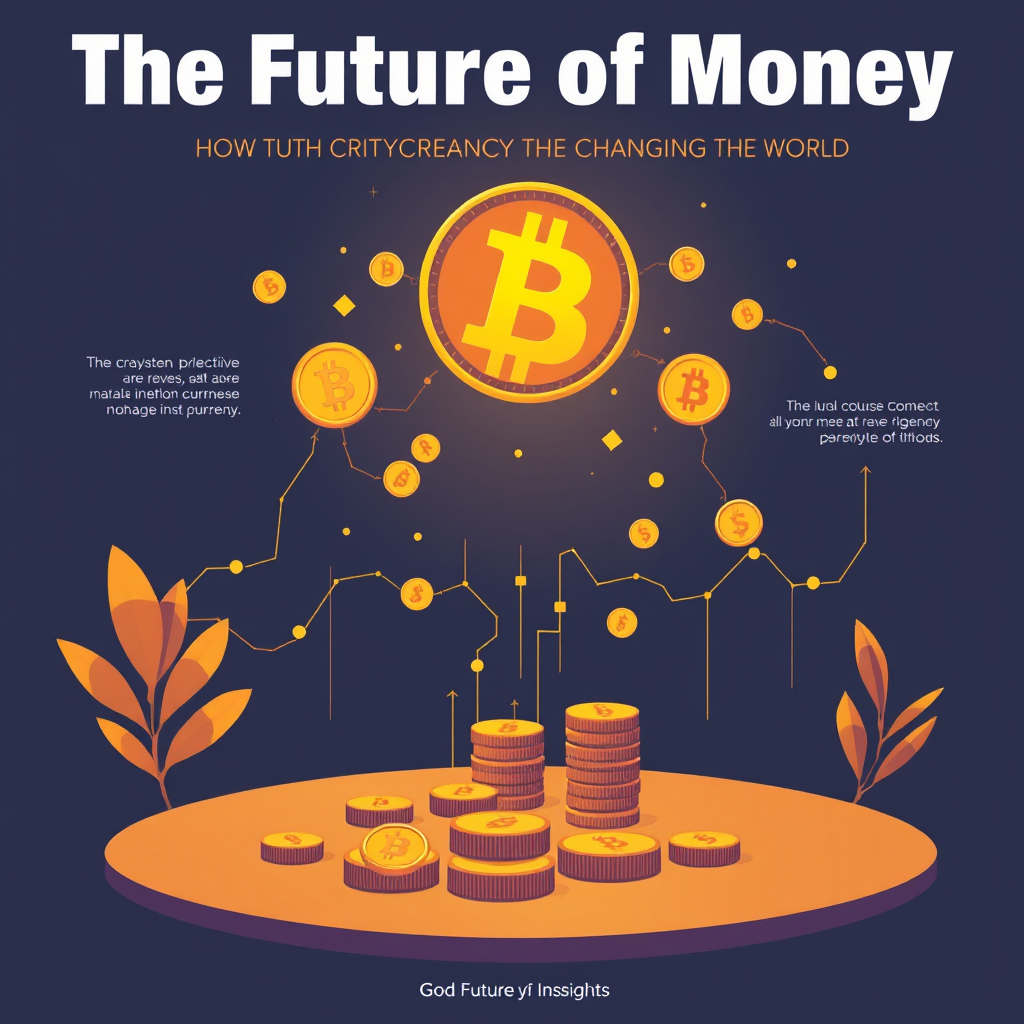
The Future of Money: How Cryptocurrency is Changing the World
What if the secrets to building real wealth were hidden in plain sight? In this article, we explore the transformative ideas from The Age of Cryptocurrency by Paul Vigna and Michael J. Casey — and how you can apply them to your own financial journey.
“The Age of Cryptocurrency” by Paul Vigna and Michael J. Casey is a deep dive into Bitcoin and the broader impact of digital currencies on the global economy. The book explores why cryptocurrencies matter, how they work, and how they challenge traditional financial systems.
Written by two Wall Street Journal journalists, the book provides a balanced perspective on the potential of blockchain technology, addressing both the promise and risks of a decentralized financial future.
Key Themes & Insights

1. What is Bitcoin and Why Does It Matter?
Bitcoin is the first decentralized digital currency, allowing peer-to-peer transactions without banks.
It emerged in 2009, created by the mysterious Satoshi Nakamoto as a response to the 2008 financial crisis.
Unlike traditional currencies, Bitcoin is scarce (21 million coins), censorship-resistant, and borderless.
Bitcoin is more than just money—it’s a financial revolution challenging centralized banking.

2. The Problems with Traditional Finance
Banks and governments control money supply, leading to inflation and economic instability.
Billions of people are unbanked, without access to secure financial services.
Transaction fees, remittance costs, and currency manipulation hurt global trade.
Bitcoin and blockchain technology offer a decentralized alternative, reducing reliance on middlemen.

3. How Cryptocurrencies Work: The Technology Behind It
Blockchain is a decentralized ledger that records all transactions transparently.
Mining secures the network, using Proof of Work (PoW) to validate transactions.
Private keys & wallets allow users to control their funds, eliminating the need for banks.
Bitcoin is trustless—no government or institution controls it, making it resistant to censorship.
Understanding blockchain is key to grasping the revolutionary power of cryptocurrencies.

4. Bitcoin’s Controversies: Silk Road, Scams, and Regulation
Bitcoin gained early adoption on Silk Road, an online black market for illicit goods.
Many critics argue that crypto enables money laundering, tax evasion, and crime.
Governments and banks have responded with regulations, bans, and legal uncertainty.
Despite setbacks, Bitcoin has survived multiple crashes and continues to grow in adoption.
Crypto’s decentralized nature makes it both powerful and controversial.
5. The Global Impact of Cryptocurrency
Financial Inclusion – Bitcoin helps the unbanked in countries like Venezuela and Nigeria.
Store of Value – Many see Bitcoin as “digital gold” that hedges against inflation.
Smart Contracts & DeFi – Ethereum and decentralized finance (DeFi) platforms expand blockchain’s potential beyond payments.
Corporate & Institutional Adoption – Companies like Tesla, MicroStrategy, and Visa are integrating crypto.
Cryptocurrency is reshaping global finance, but its long-term future remains uncertain.
Key Takeaways
Bitcoin was created to challenge traditional finance and empower individuals.
Blockchain technology ensures transparency, security, and decentralization.
Cryptocurrencies have real-world applications but also face risks like regulation and volatility.
Bitcoin’s success has inspired thousands of altcoins and innovations like DeFi and NFTs.
The future of money may be digital, but crypto’s role in it is still evolving.
Final Thoughts
The Age of Cryptocurrency is a must-read for anyone looking to understand Bitcoin’s origins, blockchain’s potential, and how digital currencies are reshaping global finance. Vigna and Casey provide a well-balanced, journalistic perspective, making this book perfect for both beginners and experienced crypto enthusiasts.
Ready to Learn More?
Want more insights on finance, investing, and wealth-building? Explore The Summary Series by Dominus Code — where we distill the world’s best finance books into practical wisdom.
This article was inspired by The Age of Cryptocurrency by Paul Vigna and Michael J. Casey.