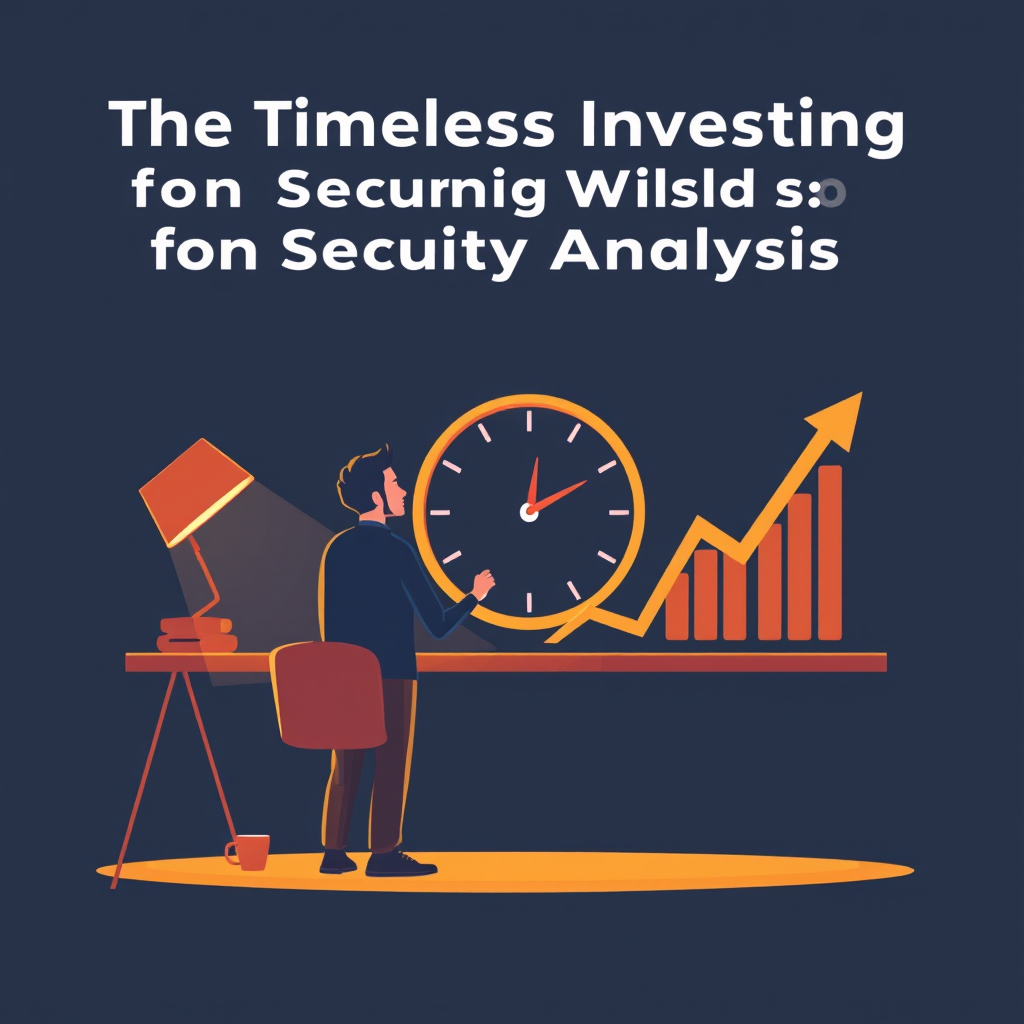

The Timeless Investing Wisdom from “Security Analysis” in 30 Seconds
What if the secrets to building real wealth were hidden in plain sight? In this article, we explore the transformative ideas from Security Analysis by Benjamin Graham and David Dodd — and how you can apply them to your own financial journey.
Security Analysis is the foundational text of value investing, authored by Benjamin Graham (the father of value investing) and his Columbia University colleague David Dodd. This book laid the groundwork for systematic, disciplined investing based on financial analysis, and it remains one of the most respected investing texts ever written.
Unlike The Intelligent Investor, which is geared toward individuals, Security Analysis is a rigorous, textbook-style guide for professional analysts and serious investors. It teaches how to evaluate securities for intrinsic value and introduces the core principles that Warren Buffett, Seth Klarman, and other investing legends have cited as instrumental in their development.

Core Philosophy: Investing is About Safety and Value, Not Speculation
“An investment operation is one which, upon thorough analysis, promises safety of principal and an adequate return.”
— Graham and Dodd
The book is built around this definition, which distinguishes investment from speculation.

Key Concepts and Lessons

1. Intrinsic Value vs. Market Price
- Intrinsic value: The true worth of a company based on fundamentals
- Market price: Often driven by emotion, sentiment, and momentum
- Investors should buy when market price is well below intrinsic value to ensure a margin of safety.

2. The Margin of Safety Principle
- This is Graham’s most famous concept:
Always buy securities with a large margin of safety to minimize downside risk.
- Margin of safety protects against:
- Unforeseen business setbacks
- Misjudgments in analysis
- Market volatility

3. Qualitative vs. Quantitative Analysis
- Quantitative: Balance sheets, income statements, ratios (P/E, current ratio, debt levels)
- Qualitative: Industry position, management quality, business model durability
- Both are essential for a full picture of a company’s value.
4. Three Types of Securities Analyzed
A. Fixed-Value Investments (Bonds)
- Focus on creditworthiness, asset coverage, and interest coverage ratios
- The book was written during the Great Depression, so the authors emphasize safety and risk control.
B. Common Stocks
- Must be analyzed with the same rigor as bonds
- Look for:
- Consistent earnings
- Strong dividend history
- Sound balance sheets
- Reasonable price relative to earnings or assets
C. Special Situations
- Includes workouts, liquidations, spin-offs, bankruptcies
- These can provide high returns with careful analysis and timing
5. Earnings Stability and Predictability
- Graham and Dodd stress the importance of a long-term track record of stable earnings
- Avoid companies with:
- Wild earnings swings
- Overreliance on trends or forecasts
- Inconsistent dividends
6. The Dangers of Speculation
- Many investors confuse speculation with investing.
- Speculation may be unavoidable, but must be recognized, limited, and separated from core investments.
7. Security Selection Should Be Conservative
- Investors should aim for:
- Sound financial condition
- Moderate earnings multiples
- Long-term profitability
- Growth can be attractive—but only when priced conservatively
Key Takeaways
Focus on thorough analysis, not price trends or forecasts
Always invest with a margin of safety
Understand the difference between price and value
Use both quantitative and qualitative tools to evaluate companies
Avoid speculation—unless done with clear rules and discipline
Final Thoughts
Security Analysis is a masterwork of financial thought—dense, rigorous, and demanding, but filled with investment wisdom that has stood the test of time. Graham and Dodd provide the blueprint for rational, value-driven investing, grounded in safety, skepticism, and disciplined analysis.
It remains essential reading for any serious investor who wants to understand how to assess risk, determine value, and avoid financial ruin in an uncertain world.
Ready to Learn More?
Want more insights on finance, investing, and wealth-building? Explore The Summary Series by Dominus Code — where we distill the world’s best finance books into practical wisdom.
This article was inspired by Security Analysis by Benjamin Graham and David Dodd.