

The Hidden History of Money That Shaped Our World
What if the secrets to building real wealth were hidden in plain sight? In this article, we explore the transformative ideas from The Ascent of Money: A Financial History of the World By Niall Ferguson — and how you can apply them to your own financial journey.
“The Ascent of Money” by Niall Ferguson is a sweeping and engaging historical narrative tracing the evolution of money, credit, and financial systems from ancient times to the 21st century. Ferguson argues that finance is not a side story to world history—it is the story.
The book explains how banks, bonds, insurance, stock markets, real estate, and globalization shaped modern civilization. It shows how financial innovation has both driven progress and contributed to crisis, and how understanding the past is crucial to interpreting today’s economic realities.

Key Themes & Insights

1. Money: From Ancient Coins to Digital Currency
Money began as a medium of exchange and store of value in ancient civilizations (e.g., Mesopotamia, Rome).
Paper currency and coins evolved to represent trust in a governing authority.
In the digital age, money has become increasingly abstract, now taking forms such as credit, digital tokens, and cryptocurrencies.
“Money is a matter of belief, not just metal or paper.”

2. Credit and Banking: The Foundation of Modern Economies
Modern banking began in Renaissance Italy, with the Medici family using double-entry bookkeeping and lending practices.
Banks transformed economies by providing credit and facilitating investment, turning capital into growth.
Ferguson explains how the spread of credit shaped revolutions, wars, and empire-building.
“Without credit, there is no capitalism. With too much, there is collapse.”
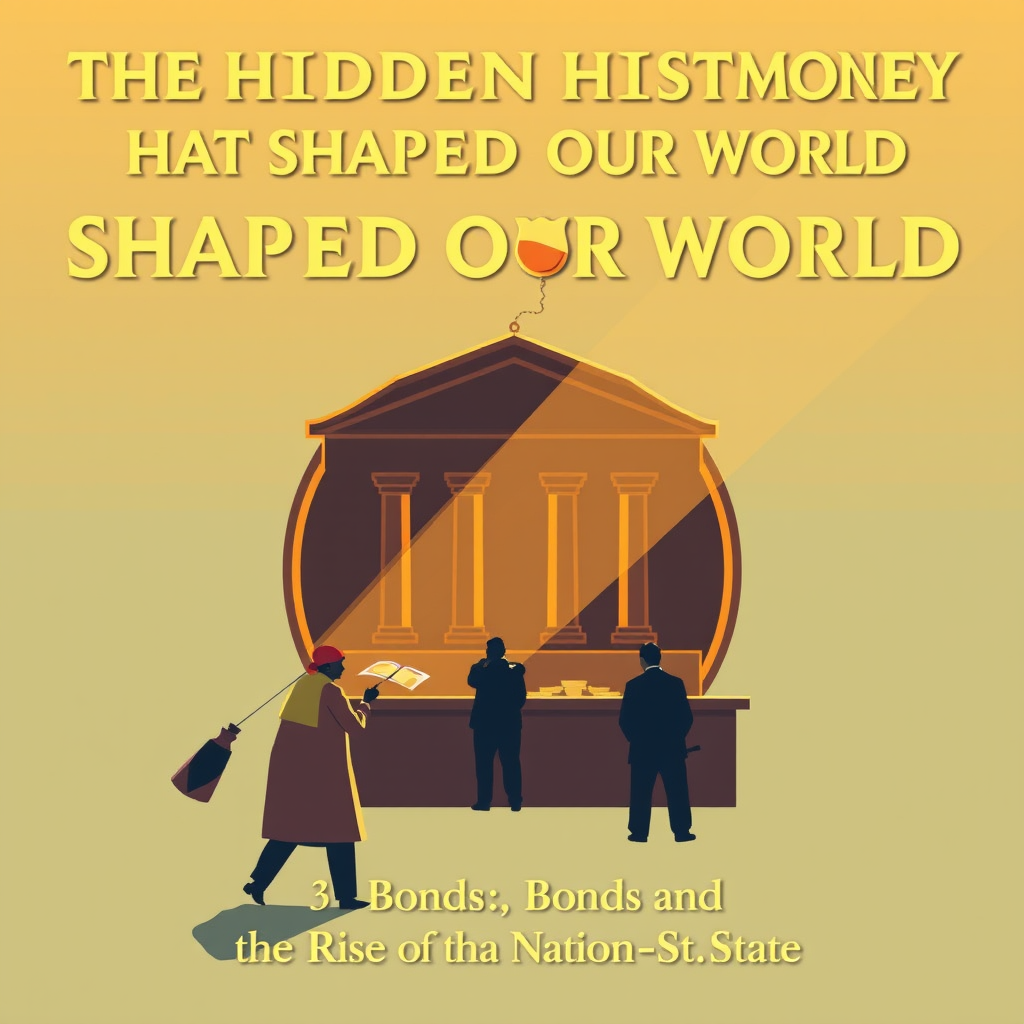
3. Bonds and the Rise of the Nation-State
Government bonds allowed states to borrow money and wage war, especially seen in the rivalry between England and France.
The bond market became a tool for financing empires and maintaining state power.
The development of sovereign debt markets also led to greater government accountability—but also occasional default and crisis.
“The bond market became the lifeblood of modern government finance.”

4. The Stock Market and the Democratization of Wealth
The Dutch East India Company issued the first modern shares of stock in the 1600s.
Over time, stock markets allowed ordinary people to become part-owners of businesses.
But they also introduced speculation, bubbles, and crashes, from the South Sea Bubble to the 1929 Wall Street Crash and 2008.
“The stock market offers prosperity—but at the price of risk and volatility.”
5. Insurance and Risk Management
Ferguson explains the origins of insurance in 17th-century London, notably at Lloyd’s Coffee House.
Insurance provided a systematic way to manage risk, making exploration, trade, and enterprise safer.
It’s a crucial pillar of financial stability, from ships to pensions to modern financial derivatives.
“Risk is inevitable—insurance was humanity’s answer to it.”
6. Real Estate and the Illusion of Stability
Ferguson discusses property ownership as a major driver of wealth—and inequality.
Housing bubbles, like the U.S. subprime mortgage crisis, reveal how real estate can be dangerously overleveraged.
Governments and banks often subsidize or securitize real estate, creating systemic risk.
“Housing feels safe—until the bubble bursts.”
7. Globalization and Financial Empires
Financial power followed imperial power—from Venice and Amsterdam to London and New York.
Global finance has expanded trade, capital flow, and wealth—but also global inequality and volatility.
The 2008 financial crisis showed how interconnected and fragile the global system is.
“Finance is global, but its consequences are deeply local.”
Key Takeaways
Money and finance are at the heart of world history—from empires to revolutions.
Financial innovations like credit, bonds, and insurance created modern economies.
Markets drive progress, but cycles of boom and bust are inevitable.
Speculation, greed, and mismanagement often lead to systemic crises.
Understanding the past helps make sense of current financial and political challenges.
Final Thoughts
The Ascent of Money is a fascinating and accessible financial history that blends storytelling with economic insight. Niall Ferguson demonstrates that finance is not just about numbers—it’s about people, power, and progress.
Ready to Learn More?
Want more insights on finance, investing, and wealth-building? Explore The Summary Series by Dominus Code — where we distill the world’s best finance books into practical wisdom.
This article was inspired by The Ascent of Money: A Financial History of the World By Niall Ferguson.