

# The Ethereum Revolution: How a Young Genius Changed Crypto Forever
In 2013, a 19-year-old programmer published a whitepaper that would change the internet forever. Vitalik Buterin didn’t just want another digital currency. He wanted a “world computer” — a global platform where anyone could build decentralized applications without permission, censorship, or gatekeepers.
That vision became Ethereum. And today, Ethereum powers everything from decentralized finance (DeFi) and NFTs to the very infrastructure of Web3.
But the road from whitepaper to world-changing platform was anything but smooth. It was marked by ideological battles, a $60 million hack, internal revolts, and one of the most controversial decisions in blockchain history.
This is the story of how Ethereum came to be — and what it means for the future of money, technology, and human organization.

From Bitcoin Enthusiast to Blockchain Visionary
Vitalik Buterin wasn’t new to crypto when he conceived Ethereum. As a teenager, he had already spent years writing for Bitcoin Magazine and exploring the potential of blockchain technology. But he kept hitting the same wall:
Bitcoin was digital money. It couldn’t do much else.
Every time a developer wanted to build something new — a decentralized application, a voting system, a financial contract — they had to create an entirely new blockchain from scratch. There was no flexible, programmable layer that could serve as a foundation for any idea.
Buterin saw the solution: a blockchain with a built-in programming language. Instead of just sending value from A to B, users could write smart contracts — self-executing agreements that run exactly as programmed, without intermediaries.
In late 2013, he published the Ethereum whitepaper. The response was immediate. Developers, cryptographers, and entrepreneurs from around the world rallied to the idea. Within months, a global team was forming to build what Buterin described as a “world computer.”

The Dream Team: Visionaries, Builders, and Ideological Warriors
Ethereum’s early development wasn’t just a technical project — it was a social experiment. The founding team was a fascinating mix of idealists, entrepreneurs, and brilliant engineers, each with a different vision for what Ethereum should become.
- Gavin Wood — Ethereum’s first CTO, who later went on to create Polkadot. Wood wrote the Yellow Paper, the formal specification of the Ethereum Virtual Machine (EVM), and laid the technical foundation that made smart contracts possible.
- Joseph Lubin — Co-founder of ConsenSys, a major Ethereum infrastructure company that would later become one of the most important organizations in the ecosystem.
- Charles Hoskinson — Wanted Ethereum to be a for-profit company with clear governance. When the community chose a nonprofit direction, he left — and later founded Cardano, one of Ethereum’s biggest competitors.
These weren’t just colleagues. They were true believers with fundamentally different ideas about money, governance, and decentralization. The tension between them was electric — and it shaped Ethereum’s DNA forever.
The big question they fought over was simple but profound: Should Ethereum be a business or a nonprofit movement?
The answer would determine not just the company’s structure, but its soul.

The DAO Hack: Ethereum’s Existential Crisis
By 2016, Ethereum was gaining momentum. One of its most ambitious experiments was The DAO — a Decentralized Autonomous Organization designed to run as a fully automated investment fund, governed entirely by code and community voting.
It raised over $150 million in ETH. It was hailed as the future of organizational structure.
Then, in June 2016, hackers found a vulnerability in The DAO’s smart contract code. Over $60 million in ETH was drained from the fund.
The community faced an impossible choice:
- Do nothing. Let the hack stand. Honor the principle that “code is law” and blockchain transactions are immutable.
- Intervene. Perform a “hard fork” — a radical change to the blockchain’s rules — to reverse the hack and return the stolen funds.
This wasn’t just a technical decision. It was a philosophical crisis about what blockchain technology was supposed to represent.
The Ethereum team chose intervention. They executed a hard fork that reversed the hack and returned the stolen funds.
But not everyone agreed. A faction of the community rejected the fork, believing that code must remain immutable no matter what. They continued mining the original chain, which became known as Ethereum Classic (ETC).
The split was painful, divisive, and permanently shaped the crypto landscape. But it also proved something important: Ethereum was willing to make hard choices to protect its users, even when it violated blockchain orthodoxy.

Smart Contracts, ICOs, and the DeFi Revolution
Despite the DAO crisis, Ethereum’s core technology kept evolving. And once developers realized what smart contracts could do, the floodgates opened.
The ICO Boom (2017–2018)
Smart contracts made it trivially easy to create new tokens and sell them to the public. The result was the Initial Coin Offering (ICO) boom — a fundraising phenomenon that raised billions of dollars and minted a new generation of crypto millionaires.
While many ICOs were scams or failed projects, the technology proved Ethereum’s potential as a platform for decentralized fundraising and governance.
The Rise of DeFi
After the ICO bubble burst, Ethereum’s killer application emerged: Decentralized Finance (DeFi).
DeFi protocols use smart contracts to recreate traditional financial services — lending, borrowing, trading, insurance — without banks or intermediaries. Users can earn yield on their crypto, swap tokens instantly, or take out loans with no credit checks.
Ethereum became the backbone of this revolution. Today, billions of dollars flow through Ethereum-based DeFi protocols daily.
NFTs and the Creator Economy
Ethereum also enabled Non-Fungible Tokens (NFTs) — unique digital assets that represent ownership of art, music, collectibles, and virtual real estate.
While the NFT market has cooled since its 2021 peak, the technology has permanently changed how creators think about digital ownership and monetization.
Through it all, Ethereum remained the dominant platform for Web3 development, despite growing pains like network congestion and high transaction fees.

Ethereum 2.0: Scaling for the Future
Ethereum’s original design had a major limitation: Proof of Work (PoW) mining. Like Bitcoin, Ethereum relied on energy-intensive computational puzzles to secure the network. This made it slow, expensive, and environmentally controversial.
The solution was Ethereum 2.0 — a massive upgrade that transitioned the network from Proof of Work to Proof of Stake (PoS).
Under Proof of Stake, validators lock up ETH as collateral to secure the network, replacing energy-intensive mining with economic incentives. The result:
- 99.95% reduction in energy consumption
- Faster transaction processing
- Better economic sustainability
But the transition wasn’t just about consensus mechanisms. Ethereum also embraced Layer 2 scaling solutions — technologies like rollups that process transactions off the main chain while inheriting its security.
These innovations have positioned Ethereum to handle mainstream adoption without sacrificing decentralization.

What Ethereum Teaches Us About Innovation
The story of Ethereum is more than a technical history. It’s a case study in how radical ideas become reality — and what happens when visionaries collide.
Innovation Requires Both Vision and Execution
Buterin’s whitepaper was brilliant, but Ethereum needed builders like Gavin Wood to turn philosophy into working code. Ideas without execution are just dreams. Execution without vision is just maintenance.
Decentralization Is Hard
The DAO hack exposed a fundamental tension: decentralized systems are powerful but fragile. When things go wrong, there’s no customer support to call. The community must make collective decisions — and not everyone will agree.
Governance Is Everything
Ethereum’s early debates about structure, profit, and control weren’t academic exercises. They determined the project’s trajectory. The decision to fork after The DAO was a governance choice as much as a technical one.
Technology Is Political
Every technical decision — consensus mechanism, fee structure, upgrade path — has political implications. Ethereum’s story proves that building decentralized technology is inseparable from building decentralized communities.
Key Takeaways
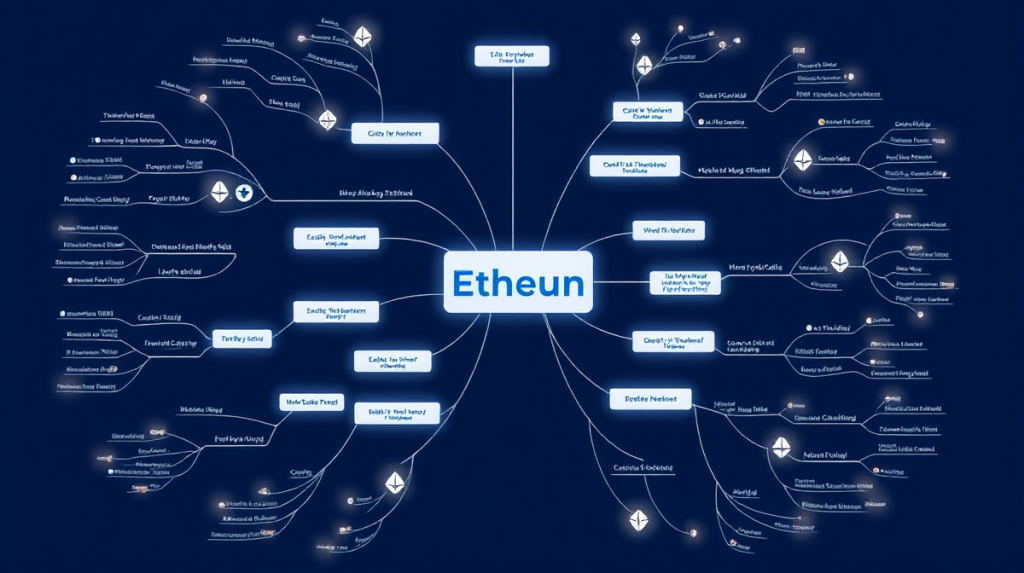
- Ethereum was created to go beyond Bitcoin, enabling decentralized applications and smart contracts through a programmable blockchain.
- Internal conflicts and philosophical differences shaped Ethereum’s early development, creating both strengths and divisions.
- The DAO hack was Ethereum’s first existential crisis, leading to a controversial hard fork and the creation of Ethereum Classic.
- Ethereum enabled the ICO boom, DeFi, and NFTs, becoming the foundational infrastructure for Web3.
- Ethereum continues to evolve through Proof of Stake, Layer 2 scaling, and increasing mainstream adoption.

The Future of Ethereum and Web3
Ethereum isn’t just a cryptocurrency. It’s a platform for building a more open, transparent, and programmable internet.
As Layer 2 solutions mature and mainstream adoption accelerates, we’re likely to see Ethereum power everything from decentralized social networks and autonomous organizations to global financial infrastructure.
The question isn’t whether Ethereum will survive. It’s whether the world is ready for what it enables.
Ready to Explore More?
Want to dive deeper into the technologies shaping our future? The Summary Series from Dominus Code distills the world’s most important ideas into clear, actionable insights.
From blockchain and AI to finance and productivity, we break down complex topics so you can understand them in minutes — not hours.
[Explore the Summary Series →](https://www.dominuscode.com/blog/)
This article was inspired by “The Infinite Machine” by Camila Russo — a must-read for anyone interested in Ethereum’s history, blockchain innovation, and the rise of decentralized finance.